 Corvallis/Salem/Eugene: (541) 250-6324
 info@calsmovinghelp.com


Arizona has quietly become one of the top retirement and cost-of-living destinations for Oregonians looking to leave the rain behind. The draws are distinct: year-round sunshine, dramatically lower cost of living outside Phoenix’s highest-end neighborhoods, retirement-friendly tax treatment (Arizona doesn’t tax Social Security), and outdoor access that’s every bit as dramatic as Oregon’s — just different. At Cal’s Moving & Storage, we’ve run the Portland-to-Phoenix and Salem-to-Tucson interstate routes hundreds of times.
This 2026 guide covers why Oregonians are heading south to Arizona, the best Arizona cities for different relocator profiles, what the move costs, the tax picture (which is retirement-specific), and the practical logistics of a 1,200–1,500 mile interstate haul. Whether you’re retiring to Scottsdale, chasing a tech job in Tempe, or buying a cost-effective starter home in Tucson, the framework below applies.
Prefer to talk? Call (503) 746-7319 — we answer live during business hours.
★ 4.9 Google Rating · 2,300+ Reviews · BBB Accredited · USDOT Licensed · IOMI® Certified
Talk to a Pro!
☀️ Quick Facts: Moving from Oregon to Arizona in 2026
| Portland → Phoenix Distance | ~1,335 miles (20 hr drive) |
| Portland → Tucson Distance | ~1,450 miles (22 hr drive) |
| Portland → Flagstaff Distance | ~1,200 miles (18 hr drive) |
| Typical Move Cost (2 BR) | $4,500 – $8,000 |
| Typical Transit Time | 3 – 7 business days |
| Arizona State Income Tax | Flat 2.5% |
| Arizona Social Security Tax | None |
| Best Time to Move | October – April (avoid AZ summer) |
Why So Many Oregonians Are Moving to Arizona

Retirement is the largest single driver. Arizona does not tax Social Security benefits, has a flat 2.5% state income tax (one of the lowest in the country), and the cost of living in most of the state is well below Portland. For Oregonians drawing Social Security plus modest retirement distributions, Arizona can save thousands per year on state taxes while stretching fixed incomes further.
The second driver is weather. For Oregonians worn down by nine months of gray, Arizona’s 300+ sunny days per year is a different world. Winter in Phoenix, Scottsdale, and Tucson is idyllic — sunny, 60s and 70s during the day. Summer is the tradeoff: 110°F+ in the low desert from June through August. Many Oregon retirees do a seasonal split — winter in Arizona, summer back in the PNW.
The third driver is the tech and healthcare economy in the Phoenix metro. Intel has a massive semiconductor campus in Chandler, TSMC is building a $65B fab in north Phoenix, and the healthcare sector (Banner Health, Mayo Clinic) keeps growing. Younger professionals and families are relocating for these jobs, not just retirees.
Best Arizona Cities for Oregon Movers
Phoenix
The anchor metro at ~1.65M in the city, ~5M in the metro. Phoenix proper has neighborhoods for every budget — Arcadia and Biltmore on the high end, Central Phoenix for walkability, Ahwatukee on the south side for families. Median home ~$435K. Popular with Oregonians coming for jobs, affordable suburbs, or desert lifestyle without Scottsdale prices.
Scottsdale
The upscale East Valley suburb. Population ~245K. Known for resorts, spring training baseball, high-end restaurants, and golf. Median home ~$790K (north Scottsdale runs higher). Popular with retirees from Portland’s West Hills and Lake Oswego who want the same amenities in a warmer climate.
Tempe & Chandler
East Valley tech suburbs. Tempe is home to Arizona State University and the major tech corridor around Mill Avenue. Chandler has Intel’s largest U.S. campus. Median homes run ~$475K–$550K. Popular with tech workers, families, and graduate students.
Tucson
Southern Arizona, 120 miles south of Phoenix. Population ~545K city, ~1.05M metro. Significantly cheaper than Phoenix (median home ~$330K), slower pace, more college-town feel (University of Arizona), and a different desert ecology (Saguaro National Park, Sonoran Desert). Popular with Oregonians seeking genuine cost savings and a small-city feel.
Flagstaff, Sedona, and Prescott
Northern Arizona’s high-country towns. Flagstaff sits at 7,000 feet elevation with pine forests and four real seasons — much closer to Oregon’s feel. Sedona has red-rock scenery and an arts community. Prescott is the historic former territorial capital. Median homes in all three are in the $550K–$700K range. Popular with Oregonians who want Arizona sunshine without Phoenix heat.
💡 Pro Tip: Never move to Phoenix, Scottsdale, or Tucson in July or August unless you absolutely have to. Temperatures routinely exceed 110°F. Moving crews work slower, trucks struggle with heat, and your belongings can warp (candles melt, electronics fail, even some furniture glues soften). If your timeline has any flexibility, target October through April. You’ll pay 10–20% less, your crew will work faster, and your stuff will arrive in better shape.
Want a binding quote for your Oregon-to-Arizona move?
Call (503) 746-7319 or request a free quote online — no commitment, no pressure.
What Does an Oregon-to-Arizona Move Cost?
Oregon-to-Arizona is a long-distance interstate move of roughly 1,200–1,500 miles. We price these on weight and mileage with a binding written estimate. Transit times are 3–7 business days. For a detailed breakdown of how long-distance pricing works, see our Long Distance Moving Cost from Oregon guide.
Typical Oregon-to-Arizona cost ranges by home size, 2026:
Studio / 1 BR: $2,800–$5,500.
2 BR: $4,500–$8,000.
3 BR: $7,000–$12,000.
4+ BR: $10,500–$18,500.
Moves to Tucson or Flagstaff add 5–10% over Phoenix pricing due to extra mileage. Summer peak pricing (June–September) runs 15–25% above off-season.
The Tax Story: Oregon vs. Arizona
Arizona’s tax picture is particularly favorable for retirees and middle-income households.
Income tax. Arizona has a flat 2.5% state income tax. Oregon has progressive brackets up to 9.9%. The savings at most income levels are substantial — for a $100K household, Arizona saves roughly $5K–$7K/year over Oregon.
Social Security. Arizona does not tax Social Security benefits. Oregon does tax them as regular income (though with some exemptions). For a retiree drawing $30K in Social Security, that’s often $1,500–$2,500/year in savings.
Sales tax. Arizona state sales tax is 5.6%; local jurisdictions add 2–3% (Phoenix around 8.6% combined, Scottsdale around 8.05%). Groceries are tax-exempt in most cities. Oregon has no sales tax. For a $30K taxable spending household, this adds ~$2,500/year.
Property tax. Arizona property tax is moderate — 0.62% statewide average, compared to Oregon’s ~1.0%. On a $500K home, that’s roughly $2,000/year savings.
Net effect. For most middle-class households, Arizona runs $3K–$6K/year cheaper than Oregon. For retirees specifically, the savings compound because of the Social Security exemption plus lower overall rates. For high earners, Arizona is meaningfully cheaper than Oregon though not as favorable as no-income-tax states like Washington or Texas.
Practical Logistics for an Oregon-to-Arizona Move

Time of year is the biggest lever. Avoid June–September peak summer if possible. October–April is far better for crews, trucks, and your belongings. Spring (March–April) and fall (October–November) are ideal.
Route planning. Cross-state to Arizona typically runs south on I-5 to California, then east on I-10 for Phoenix and Tucson, or south on US-93 from Las Vegas for Phoenix. I-5 through Northern California can see winter weather but is normally passable. We monitor routes and adjust as conditions require.
Arizona driver’s license and registration. Arizona requires you to transfer your driver’s license immediately upon establishing residency and register your vehicles within a reasonable time (typically 30 days). An AZ emissions test is required for registration in Maricopa (Phoenix) and Pima (Tucson) counties. Bring Oregon title, proof of insurance, and proof of Arizona residency.
Heat-proof your shipment. For summer moves (if unavoidable), ask for a climate-controlled truck, don’t pack candles/electronics/crayons/vinyl records in spots exposed to roof heat, and consider scheduling delivery for early morning when destination temperatures are lower.
Utilities. APS (Arizona Public Service) and SRP (Salt River Project) split the Phoenix metro for electric service. Tucson Electric Power serves Tucson. Southwest Gas provides natural gas statewide. Set up 1–2 weeks before arrival.
Frequently Asked Questions
How long does a Portland-to-Phoenix move take?
Typical delivery window is 3–5 business days for dedicated trucks, 5–8 days for shared-load. Every quote includes an explicit delivery window.
Is it really worth moving to Arizona for the taxes?
For retirees drawing Social Security plus moderate retirement income, almost always yes — savings typically run $5K–$10K+/year. For younger workers, the math depends on income. Run both sides through a real tax calculator before deciding, not just the headline income-tax rate.
Should I ship my car or drive it to Arizona?
A Portland-to-Phoenix drive is 19–20 hours — doable in 2 days with one overnight. Shipping a car runs $900–$1,400. For most retirees and families, driving makes sense because you also need ground transportation at the destination. For solo workers, shipping can be easier.
When should I book my Arizona move?
For October–April off-season, 3–5 weeks ahead is typically enough. For May–September peak, book 6–8 weeks ahead.
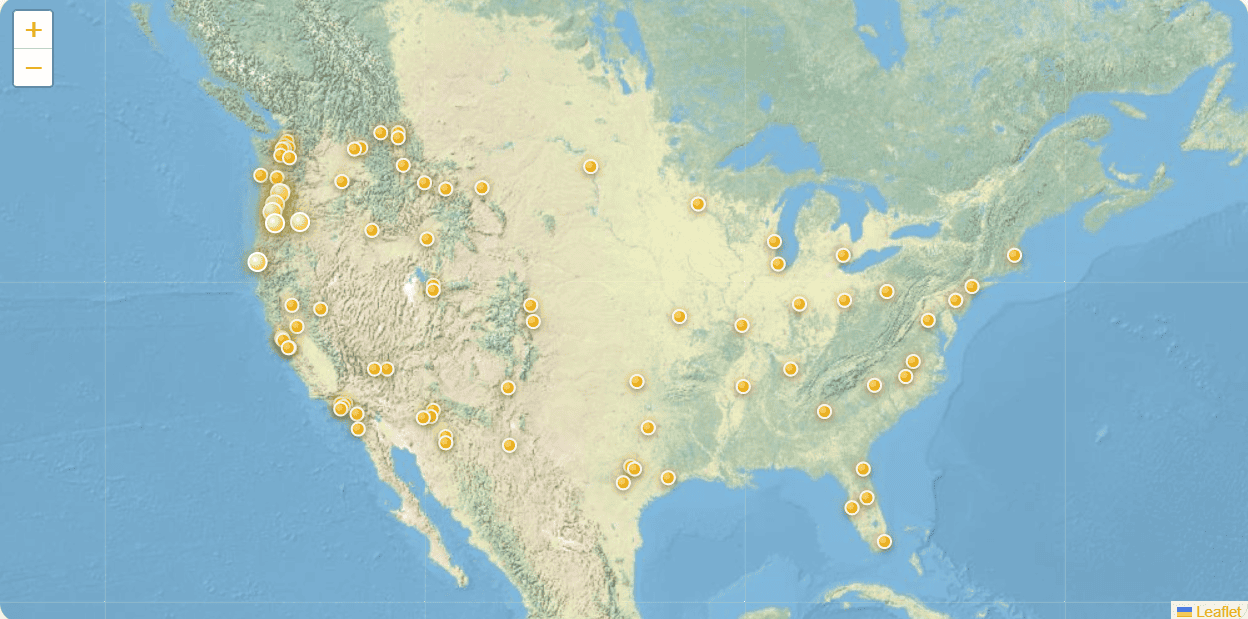
Where We’ve Moved Oregonians
Over 500 interstate moves completed
From next door to across the country — Cal’s has you covered.
Ready to Plan Your Move to Arizona?
Oregon-to-Arizona is a substantial interstate move and every household is different. The ranges in this guide are a starting point — a detailed binding estimate based on your inventory, origin, and destination is the only way to get an accurate number.
Cal’s Moving & Storage is a fully licensed interstate carrier with 500+ completed interstate moves. We’ll walk you through every line item, coordinate the cross-country route, and give you a price we’ll stick to.
Call us at (503) 746-7319 for Portland Metro or (541) 250-6324 for Salem, Corvallis, and Eugene, email info@calsmovinghelp.com, or request your free quote online.
Talk to a Pro Today!
Get personalized moving solutions and expert advice tailored to your unique needs. Connect now.
“Hired as Movers, Left as Friends”
Quick Quote
Related Moving Resources
More guides for planning your out-of-Oregon relocation: