 Corvallis/Salem/Eugene: (541) 250-6324
 info@calsmovinghelp.com


Texas has been one of the largest out-of-state destinations for Oregonians in the post-pandemic era. The pull is hard to miss: no state income tax, lower cost of living, warmer winters, a booming tech economy in Austin, and a pace of cultural and political life that differs dramatically from the Pacific Northwest. At Cal’s Moving & Storage, we’ve completed interstate moves to every major Texas metro — Austin, Dallas-Fort Worth, Houston, San Antonio — and we know this is one of the longer hauls we run.
This 2026 guide covers why Oregonians are heading to Texas, the best Texas cities for different Oregon relocator profiles, what the move costs (a 2,000-mile interstate move is a different animal than going to Boise), the tax picture, and the practical logistics of a multi-day cross-country haul. Whether you’re moving to Austin for tech, to DFW for a corporate relocation, or to Houston for energy-sector opportunities, the framework below applies.
Prefer to talk? Call (503) 746-7319 — we answer live during business hours.
★ 4.9 Google Rating · 2,300+ Reviews · BBB Accredited · USDOT Licensed · IOMI® Certified
Talk to a Pro!
🌴 Quick Facts: Moving from Oregon to Texas in 2026
| Portland → Austin Distance | ~2,100 miles (31 hr drive) |
| Portland → Dallas Distance | ~2,020 miles (30 hr drive) |
| Portland → Houston Distance | ~2,265 miles (34 hr drive) |
| Typical Move Cost (2 BR) | $5,500 – $9,500 |
| Typical Transit Time | 5 – 10 business days |
| Texas State Income Tax | None |
| Texas Sales Tax | 6.25% state (local adds up to 2%) |
| Best Time to Move | October – March (avoid TX summer heat) |
Why So Many Oregonians Are Moving to Texas

The biggest single driver is the combination of no state income tax and meaningfully lower cost of living. Texas has no state income tax, period. Combined with median home prices in DFW around $365K, Houston around $330K, and San Antonio around $290K, the household economics can be dramatically better than Portland even accounting for higher property taxes in Texas.
The second driver is jobs. Austin’s tech scene has absorbed thousands of transplants from Pacific Northwest tech companies. Tesla, Oracle, Apple, Samsung, and the broader semiconductor and software ecosystems continue to expand. Dallas-Fort Worth has become one of the largest corporate relocation destinations in the country (Charles Schwab, Toyota North America, AT&T). Houston remains the center of U.S. energy and petrochemicals, plus the Texas Medical Center — the largest medical complex on Earth.
The third driver is lifestyle and weather. For Oregonians tired of nine months of gray rain, a Texas winter (sunny 60s in Austin, 70s in Houston) can feel revelatory. The tradeoff is summer — Texas summers are long and hot, and the humidity in Houston specifically takes adjustment.
Best Texas Cities for Oregon Movers
Austin
The obvious tech destination. Population ~975K in the city, ~2.5M in the metro. Live music, food, outdoor culture, and UT Austin keep the city young and dynamic. Median home price ~$540K (still up significantly from pre-2020 levels). Popular Austin neighborhoods for Oregon transplants: South Congress/SoCo, East Austin, Cherrywood, Mueller, and the suburbs of Round Rock and Cedar Park for families.
Dallas & Fort Worth (DFW)
Massive metro of ~7.9M. Corporate headquarters, professional sports, strong arts and cultural institutions. Median home in Dallas proper ~$410K; suburbs like Plano, Frisco, and Allen run higher. Fort Worth is a distinct city with more of a Western/stockyards character. Popular with Oregonians relocating for corporate jobs or seeking cost-effective larger homes with land.
Houston
The energy capital, and one of the most ethnically diverse cities in America. Population ~2.3M in the city, ~7.5M in the metro. Median home ~$330K — the most affordable of the big four Texas metros. Heat and humidity are the most extreme in the state. Popular with medical professionals (Texas Medical Center), engineers (oil & gas), and families seeking value on housing size.
San Antonio
Roughly an hour south of Austin. Population ~1.5M city, ~2.6M metro. Older Spanish/Mexican cultural heritage (the Alamo, River Walk), strong military presence (Joint Base San Antonio). Median home ~$290K — the best large-metro value in Texas. Popular with retirees and cost-conscious movers.
Smaller Options
The Texas Hill Country (Fredericksburg, Kerrville, Wimberley) offers small-town life and scenic hills. Waco has grown substantially. El Paso (far west) has its own distinct border character. These are niche targets but can be the right fit for specific relocators.
💡 Pro Tip: Property tax is the hidden counterweight to Texas’s no-income-tax advantage. Texas has no state income tax, but its property taxes are among the highest in the U.S. — typically 2.0–2.5% of assessed value, versus Oregon’s ~1.0%. On a $400K home that’s an extra $4K–$6K per year. Include property tax in your cost-of-living math before you commit. For most Oregonians earning under $100K, the tax-swap comes close to a wash.
Want a binding quote for your Oregon-to-Texas move?
Call (503) 746-7319 or request a free quote online — no commitment, no pressure.
What Does an Oregon-to-Texas Move Cost?
Oregon-to-Texas is a full cross-country interstate move, roughly 2,000–2,300 miles depending on destination. We price these on weight and mileage with a binding written estimate. Transit times are 5–10 business days because the truck covers 300–400 miles/day with driver rest and fuel stops. For a detailed breakdown of how long-distance pricing works, see our Long Distance Moving Cost from Oregon guide.
Typical Oregon-to-Texas cost ranges by home size, 2026:
Studio / 1 BR: $3,500–$6,500.
2 BR: $5,500–$9,500.
3 BR: $8,000–$14,000.
4+ BR: $12,000–$22,000+.
Shared-load pricing (your shipment rides with others heading south) can save 20–30% but stretches the delivery window to 10–14 days.
The Tax Story: Oregon vs. Texas
The Texas tax picture is the mirror image of Oregon’s.
Income tax. Texas has none. Oregon taxes at progressive rates topping out at 9.9% above ~$125K single. For any household earning above ~$100K, the income tax savings are substantial. For a $200K household, that’s often $10K–$15K/year saved.
Sales tax. Texas state sales tax is 6.25%; local jurisdictions add up to 2%. Groceries are tax-exempt. Oregon has no sales tax. For a typical household spending ~$30K/year on taxable goods, this adds $2,000–$2,500/year.
Property tax. Texas property tax is the big counterweight — 2.0–2.5% of assessed value in most counties, compared to Oregon’s ~1.0%. On a $400K home that’s $4K–$6K/year more than Oregon. On a $700K home, it’s $7K–$10K/year more.
Net effect. For households earning under $80K, the property tax largely offsets the income-tax savings — Texas and Oregon come out similar overall. For households earning over $150K, Texas is meaningfully cheaper. For very high earners ($500K+), Texas saves substantial money — one reason the Austin migration has been so tech-heavy.
Practical Logistics for an Oregon-to-Texas Move

Time your move away from Texas summer. Texas summers (June–September) are brutal on movers and moving trucks. Heat indexes over 100°F are routine. If you have flexibility, move October through March — the crew is more productive, the truck doesn’t overheat, and your shipment arrives in better condition.
Route planning. Cross-country to Texas typically runs south on I-5 to California, then east on I-40 or I-10 depending on destination. I-5 through Northern California and the Siskiyous can be weather-sensitive in winter. We monitor routes and adjust if needed.
Texas driver’s license and registration. Texas requires you to transfer your driver’s license within 90 days of establishing residency and register your vehicle within 30 days. Texas vehicle inspections are required before registration. Bring Oregon title, proof of insurance, and proof of Texas residency.
Homestead exemption. If you buy a home in Texas, file for the homestead exemption as soon as you close. It caps how much your assessed value can increase year-over-year (typically 10% annual cap) — a real protection against runaway property tax in appreciating markets. Deadline is April 30 following the tax year.
HOAs. Many Texas subdivisions (especially in DFW and suburban Austin/Houston) have HOAs with significant rules and dues. Before buying, get the HOA documents and read them. Oregon HOAs exist but Texas HOAs have more teeth.
Frequently Asked Questions
How long does an Oregon-to-Texas move take in transit?
Typical delivery window is 5–10 business days for dedicated trucks. Shared-load moves run 10–14 days. Every quote includes an explicit delivery window in writing.
Should I ship my car or drive it?
For cross-country moves over 1,500 miles, auto transport often makes sense. Shipping a car from Oregon to Texas runs $1,200–$1,800. If you’re driving, budget 3–4 days, two hotel nights, and pet/family logistics. We can coordinate auto transport as part of your move.
When should I book my Texas move?
For moves October–April, 4–6 weeks ahead is typically enough. For summer peak (May–September), book 8–10 weeks out.
Do I need to adjust packing for the long distance?
Yes. Interstate moves require more robust packing than local moves — double-walled boxes for heavy items, custom crating for fragile or high-value pieces, inventory tagging. We include interstate-grade packing in our full-pack service.
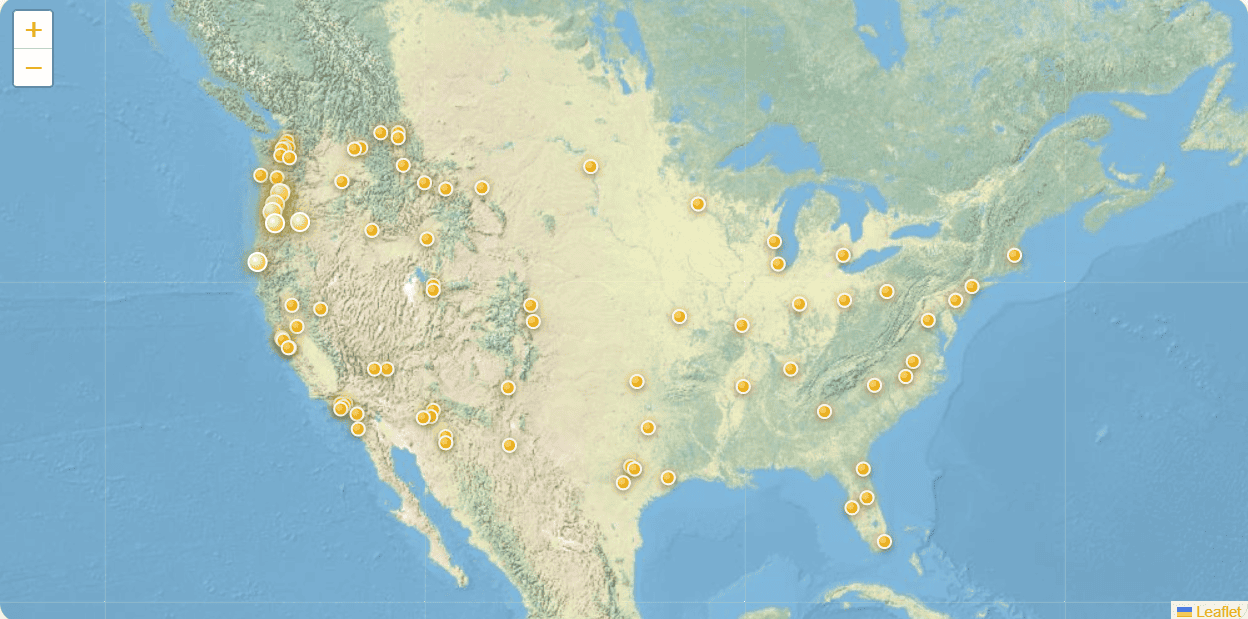
Where We’ve Moved Oregonians
Over 500 interstate moves completed
From next door to across the country — Cal’s has you covered.
Ready to Plan Your Move to Texas?
Oregon-to-Texas is a cross-country undertaking and every move is different. The ranges in this guide are a starting point — a detailed binding estimate based on your inventory, origin, and destination is the only way to get an accurate number.
Cal’s Moving & Storage is a fully licensed interstate carrier with 500+ completed interstate moves. We’ll walk you through every line item, coordinate the cross-country route, and give you a price we’ll stick to.
Call us at (503) 746-7319 for Portland Metro or (541) 250-6324 for Salem, Corvallis, and Eugene, email info@calsmovinghelp.com, or request your free quote online.
Talk to a Pro Today!
Get personalized moving solutions and expert advice tailored to your unique needs. Connect now.
“Hired as Movers, Left as Friends”
Quick Quote
Related Moving Resources
More guides for planning your out-of-Oregon relocation:
- Long Distance Moving Cost from Oregon: 2026 Pricing Guide
- Moving to Washington from Oregon in 2026
- Moving to Idaho from Oregon in 2026
- Long Distance Movers in Oregon — service overview and interstate licensing.