 Corvallis/Salem/Eugene: (541) 250-6324
 info@calsmovinghelp.com


Washington has quietly become one of the most common destinations for Oregonians relocating out of state. The reasons usually come down to three things: no state income tax, closer access to Seattle’s tech economy, and the unique cross-river commuter economics of Vancouver, WA. At Cal’s Moving & Storage, we’ve handled hundreds of Oregon-to-Washington relocations — from quick Portland-to-Vancouver moves that cross the Columbia, to cross-state hauls out to Spokane.
This 2026 guide covers what’s driving the migration, the best Washington cities for Oregon movers, real cost ranges, the tax picture (including the Vancouver commuter pattern), and the practical logistics that trip up people who haven’t done a cross-state move before. Whether you’re chasing a tech job in Bellevue, downsizing to a cheaper cost of living in Tacoma, or making the most common move of all — Portland to Vancouver — the framework below applies.
Prefer to talk? Call (503) 746-7319 — we answer live during business hours.
★ 4.9 Google Rating · 2,300+ Reviews · BBB Accredited · USDOT Licensed · IOMI® Certified
Talk to a Pro!
📍 Quick Facts: Moving from Oregon to Washington in 2026
| Most Common Route | Portland → Vancouver (~10 mi) |
| Portland → Seattle Distance | ~175 miles (3 hr drive) |
| Portland → Spokane Distance | ~355 miles (5.5 hr drive) |
| Typical Move Cost (2 BR) | $3,000 – $5,500 |
| Typical Transit Time | Same day to 2 business days |
| Washington State Income Tax | None |
| Oregon State Income Tax (top bracket) | ~9.9% |
| Best Time to Move | Late September – mid May |
Why So Many Oregonians Are Moving to Washington

The single biggest driver is taxes. Oregon’s top marginal income tax rate is roughly 9.9% on income above ~$125K for single filers. Washington has no state income tax at all. For a dual-income household earning $200K in Oregon, that’s often $15K–$20K a year in state tax that disappears by crossing the Columbia. Over a career, the difference is life-changing for high earners, tech workers, and retirees drawing from taxable portfolios.
The second driver is jobs. Seattle’s tech economy — Amazon, Microsoft, Boeing, and the second-tier companies built around them — pulls Oregon software engineers, product managers, and operations leaders north every year. Portland has its own tech scene, but the Seattle/Bellevue corridor offers more companies, more senior roles, and (after factoring in the no-income-tax math) better take-home.
The third driver is Vancouver, WA specifically. Vancouver sits directly across the Columbia from Portland, connected by two bridges (I-5 and I-205). You can live in Vancouver, work in Portland, and pay Oregon income tax on your Oregon wages but avoid it on any non-wage income (investments, side businesses, sales of property). The math gets complicated but it’s meaningful money for anyone earning substantial non-wage income. We’ll cover this in detail below.
Best Washington Cities for Oregon Movers
Vancouver (The Obvious One)
Vancouver is the most common OR→WA destination by far. It’s technically a separate state, but functionally it’s a Portland suburb. Median home prices in 2026 run roughly $500K (vs. Portland’s ~$560K). You get the same Columbia River geography, access to Portland amenities, and Clark County schools — while skipping Oregon income tax on any non-wage income. Downsides: you’ll cross a traffic-choked bridge twice a day if you commute to Portland, and Washington’s higher sales tax (6.5% state plus local, reaching 8.5–9% in Clark County) bites on big purchases.
Seattle & Bellevue
Seattle/Bellevue is the destination for tech migration. Median home prices are significantly higher than Portland ($800K–$1.1M depending on neighborhood), but tech salaries compensate, and the no-income-tax math makes the take-home comparison much closer than the sticker prices suggest. Bellevue specifically attracts families for its schools (one of the top public school districts in Washington) and proximity to Microsoft, Amazon Seattle HQ is across the lake.
Tacoma
Tacoma is the cost-conscious option in the Puget Sound corridor — roughly $500K median home price, 45 minutes to downtown Seattle, deep-water port economy, growing arts scene, and Joint Base Lewis-McChord nearby for military households. Best fit for Oregonians who want Seattle access without Seattle prices.
Olympia
State capital, smaller city (~55K population), more government-sector jobs, lower cost of living than Seattle/Tacoma. Popular with state employees transferring from Salem and Oregonians who want a slower pace without going fully rural.
Spokane
Eastern Washington. Very different from the Pacific NW coast Oregonians know — drier, colder winters, dramatically cheaper (median home ~$380K), more conservative politically. Popular with Oregonians looking for a genuine cost-of-living cut, or retirees who want four real seasons.
💡 Pro Tip: If you’re moving to Vancouver, WA and keeping an Oregon job, get a Washington driver’s license and register to vote in Washington within 30 days. This establishes your Washington residency for tax purposes. Keeping an Oregon driver’s license while claiming Washington residency is a red flag that can trigger an Oregon residency audit on your non-wage income.
Want a binding quote for your Oregon-to-Washington move?
Call (503) 746-7319 or request a free quote online — no commitment, no pressure.
What Does an Oregon-to-Washington Move Cost?
For short-distance moves (Portland→Vancouver, sub-30 miles), Cal’s prices these as local moves, hourly-billed. A typical 2-bedroom Portland-to-Vancouver move runs $900–$1,800 depending on crew size, truck, and move complexity. For longer moves (Portland→Seattle, Tacoma, Olympia, Spokane), we price as intrastate long-distance using weight and distance. For an in-depth pricing breakdown see our Long Distance Moving Cost from Oregon guide.
Typical Oregon-to-Washington cost ranges by home size, 2026:
Studio / 1 BR: $1,200–$3,500 (Portland–Vancouver on the low end, Portland–Spokane on the high end).
2 BR: $2,000–$5,500.
3 BR: $3,500–$8,000.
4+ BR: $5,500–$12,000.
Longer routes (Portland→Spokane, Portland→Bellingham) push toward the top of each range because the truck crosses either the Cascades or 350+ miles of I-90.
The Tax Story: Oregon vs. Washington
The tax comparison is the reason most Oregonians move to Washington. Here’s how it actually works:
Oregon. State income tax of 4.75%, 6.75%, 8.75%, and 9.9% at progressive brackets. The top 9.9% rate kicks in at roughly $125K single / $250K joint. Oregon has no state sales tax. Property tax is moderate (~1% of assessed value).
Washington. No state income tax. Sales tax is 6.5% state plus local, reaching 8.5%–10.5% depending on jurisdiction (Seattle is ~10.35%; Clark County 8.5%). Property tax is comparable to Oregon (~0.9–1% of assessed value). Washington has a long-term capital gains tax (7% on gains over ~$270K) that kicked in in 2022 — relevant for high-net-worth Oregonians but not most movers.
Net effect. For most households earning under $150K, the difference is small — the sales tax you pay in WA roughly balances the income tax you’d pay in OR. For higher earners (above $150K), Washington is meaningfully cheaper. For high-earning retirees drawing from taxable investments, Washington can save tens of thousands annually.
The Portland-Vancouver Commuter Pattern
An estimated 70,000+ Washington residents commute into Oregon for work every day. Most live in Vancouver and work in downtown Portland or Washington County. Here’s the tax reality for this pattern:
- Wages earned in Oregon are taxed by Oregon, regardless of where you live. No way around that.
- Non-wage income (investments, rental property, side businesses, capital gains) is taxed only in your state of residence. If you live in Washington, those are tax-free at the state level.
- Oregon has tightened residency rules over the years to prevent false claims of Washington residency. You need a real Washington address, driver’s license, voter registration, and primary residence in Washington to legitimately claim it.
The commuter math works best for people whose non-wage income is significant relative to their wage income — founders, investors, retirees, or anyone selling a business or a piece of property.
Practical Logistics for an Oregon-to-Washington Move
Bridge timing (Portland-Vancouver). I-5 and I-205 bridges both choke during rush hour. If your move is Portland→Vancouver, schedule the truck to cross between 10 AM and 2 PM. Moving on a weekday evening commute adds 30–60 minutes and fuel cost.
Cascade passes (Portland-Spokane, Portland-Tri-Cities). If your route crosses the Cascades in winter (I-90 Snoqualmie Pass or I-84 Columbia Gorge), weather can disrupt transit. Cal’s monitors passes and can reschedule at no cost if conditions close the route. We won’t run a truck through snow-chain-required conditions.
Washington vehicle and license. Washington requires you to transfer your driver’s license within 30 days of establishing residency and vehicle registration within 30 days of moving. You’ll need proof of WA residency (lease or deed), Oregon title for each vehicle, and a WA emissions test in Clark, King, Pierce, Snohomish, or Spokane counties.
Utilities. Schedule shutoff at your Oregon address for the day after your move and setup at your Washington address 1–2 business days before you arrive. PGE/PacifiCorp are Oregon-only; Clark Public Utilities serves most of Vancouver; Seattle City Light covers Seattle; Puget Sound Energy covers much of the Puget Sound corridor.
Frequently Asked Questions
How long does a Portland-to-Vancouver move actually take?
A typical 2-bedroom Portland-to-Vancouver move with Cal’s takes 4–6 hours of on-clock labor, load to unload. We bill hourly on these short moves.
Do I need a binding estimate for a Portland-to-Vancouver move?
Short intrastate-feeling moves like Portland-Vancouver are typically hourly, not binding-weight based. For longer moves (to Seattle, Tacoma, Spokane), a binding estimate based on weight is standard and we always provide one in writing.
Is my Oregon driver’s license valid in Washington?
Yes, but only for 30 days after you establish Washington residency. After that, you’re required by Washington law to transfer it.
Will Cal’s deliver to all Washington cities?
Yes. We regularly deliver to Vancouver, Seattle, Bellevue, Tacoma, Olympia, Spokane, Bellingham, Yakima, the Tri-Cities, and everywhere in between. Our Oregon branches coordinate directly so there’s no broker in the middle.
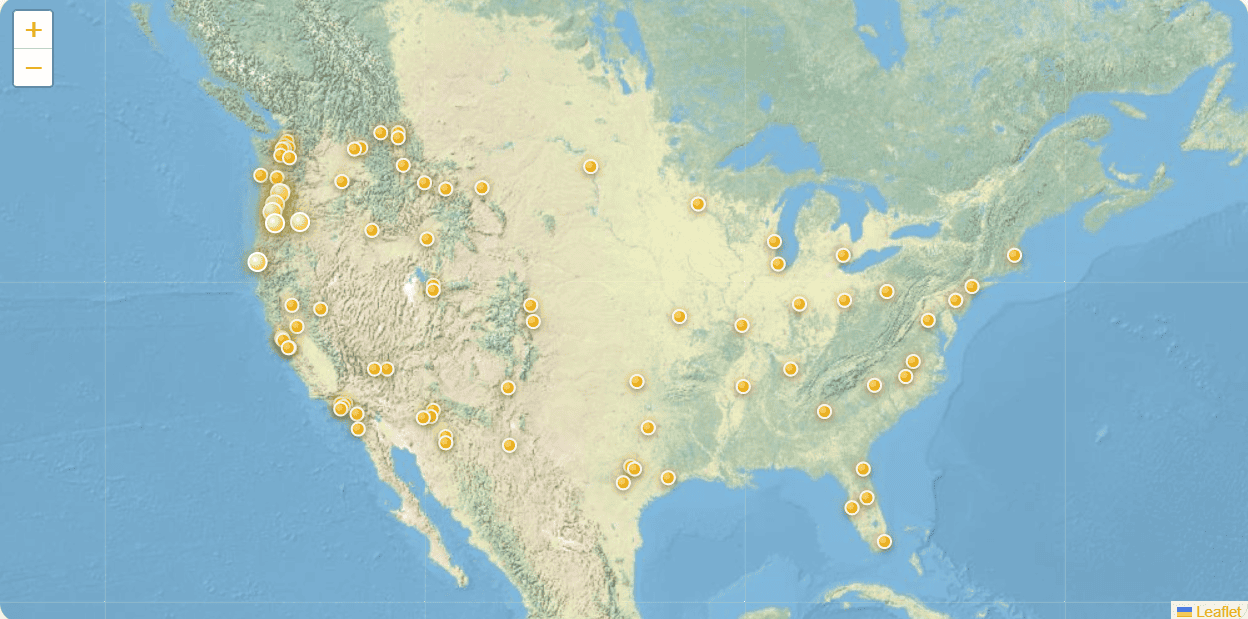
Where We’ve Moved Oregonians
Over 500 interstate moves completed
From next door to across the country — Cal’s has you covered.
Ready to Plan Your Move to Washington?
Every Oregon-to-Washington move is unique. The ranges in this guide are a starting point — the best way to know what your specific move will cost is a detailed quote based on your household inventory, origin, and destination.
Cal’s Moving & Storage is a fully licensed Oregon and Washington interstate carrier. We’ve run hundreds of Oregon-to-Washington moves, from quick Portland-Vancouver crossings to full-household relocations to Seattle and Spokane. Binding estimates, dedicated trucks, uniformed crews, no brokers.
Call us at (503) 746-7319 for Portland Metro or (541) 250-6324 for Salem, Corvallis, and Eugene, email info@calsmovinghelp.com, or request your free quote online.
Talk to a Pro Today!
Get personalized moving solutions and expert advice tailored to your unique needs. Connect now.
“Hired as Movers, Left as Friends”
Quick Quote
Related Moving Resources
More guides for planning your out-of-Oregon relocation:
- Long Distance Moving Cost from Oregon: 2026 Pricing Guide
- Long Distance Movers in Oregon — full service overview and interstate licensing.
- Moving to Oregon From California in 2026 — the reverse direction for inbound migration.
- Customer Reviews — 4.9-star-rated across 2,300+ completed moves.