Corvallis/Salem/Eugene: (541) 250-6324
 info@calsmovinghelp.com

Commercial and Office Moving Across Oregon
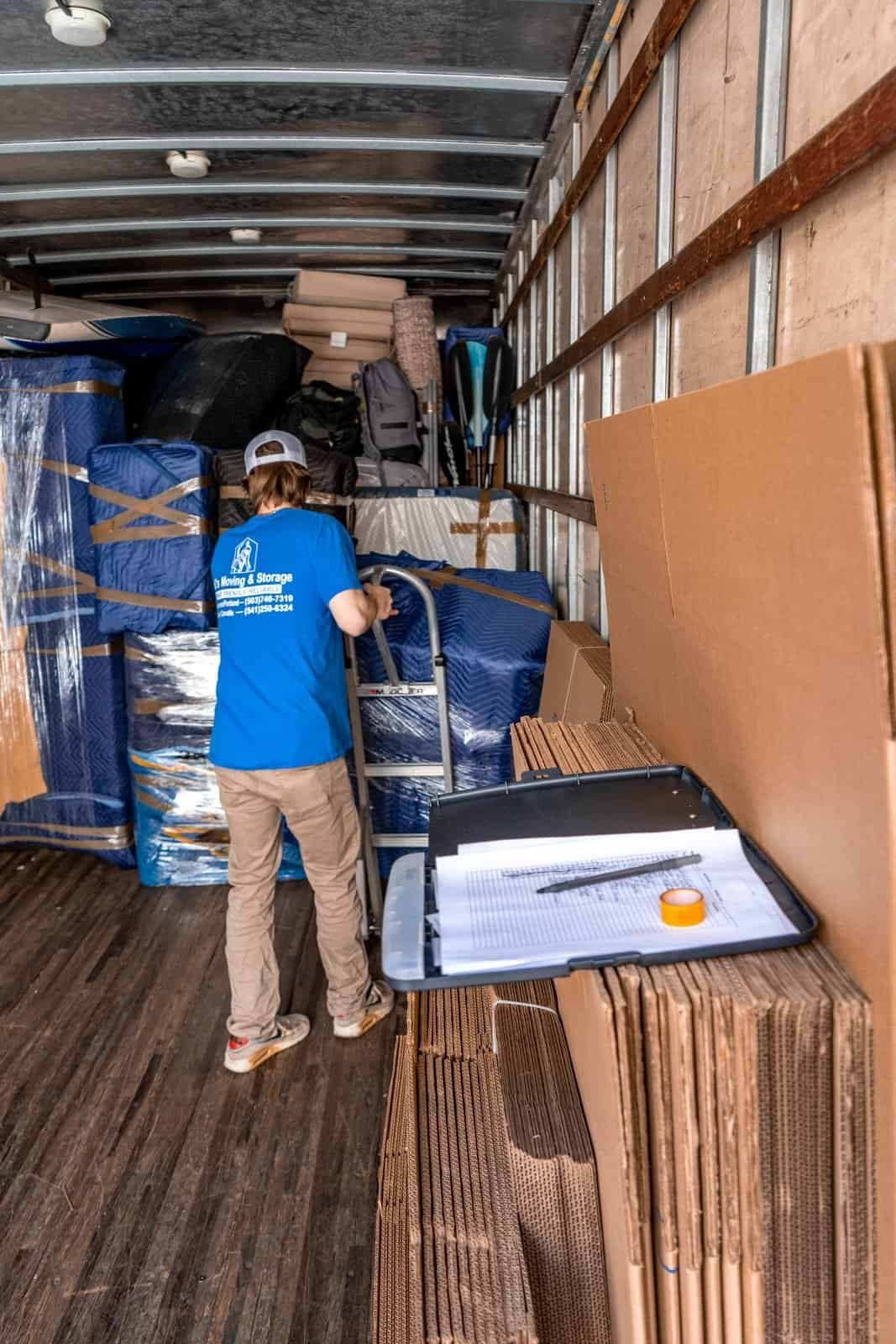
Relocating a business is not a bigger version of moving a house. The furniture is the easy part. What costs you money is the hours your people cannot work, the systems that are not plugged back in, and the building manager who will not release the freight elevator because nobody sent a certificate of insurance. Cal’s Moving & Storage plans around those problems, working out of five Oregon locations and one in Vancouver, Washington.
We are an IOMI Certified Office Mover, licensed under USDOT 3311673, MC 1052087 and ODOT 239715. We relocate offices, retail floors, warehouses, clinics and server rooms — most of it outside business hours, so your staff walk into a working office instead of a day of boxes.
What a Business Move Actually Costs You
The invoice is rarely the expensive part.
If twenty people cannot work for a day, that day costs more than the move does. It is why almost every commercial job we run happens in the evening, over a weekend, or in phases — one department at a time, so the business never fully stops. We would rather work Saturday than hand you a cheaper invoice and a Monday of downtime.
It is also why we do not publish a commercial rate card. A twelve-person office with standard workstations and a warehouse with racking and a forklift bay are not the same job, and pricing either one off a phone call would be guesswork. We walk the space, write down what is actually there, and put the scope and the price in writing before anyone commits.
What We Relocate
- Offices and workstations. Desks, cubicle systems, conference rooms, filing and executive furniture, labelled and placed to your floor plan so people can sit down and work.
- IT and server rooms. We disconnect and reconnect computers, monitors, printers and server equipment, so your hardware comes back up without booking a separate vendor.
- Retail and showroom. Fixtures, shelving, display cases and stock, usually overnight so the doors open on schedule.
- Warehouse and industrial. Racking, pallets, inventory and shop equipment, sequenced so the new space becomes usable as it fills.
- Records and archives. Files moved in sequence and kept in order, with commercial storage for anything the new space cannot take yet.
- Safes and heavy equipment. Safes, plan files, industrial machinery and anything else that needs proper gear rather than optimism.
How a Commercial Move Runs
Walkthrough on site
We walk the building with you and inventory what is actually moving: workstation counts, server racks, safes, what stays, what gets surplused. Access matters as much as contents — dock height, freight elevator, stair turns and where a truck can legally park at both ends.
Written scope and schedule
You get the crew size, the equipment, the sequence and the price in writing. If the move runs in phases, each phase gets its own window so you know exactly which teams are down and when.
Building paperwork and certificates of insurance
Most commercial landlords will not let a mover through the door without a certificate of insurance naming them. We issue the COI for both buildings and handle the dock and elevator reservations before move day, not on it.
Labelling and prep
Every item is tagged to a destination on the new floor plan before anything is lifted. Staff pack their own desk crates where that makes sense, and our crews handle the rest.
The move itself, usually after hours
Evenings and weekends are the norm rather than the exception. Floors, door frames and lift interiors get protected before the first item moves.
Reconnect and walk the floor
Workstations reassembled, machines reconnected, and a walkthrough with you before we leave so anything out of place gets fixed that night instead of Monday morning.
Working With Your Building
The paperwork stops more moves than the furniture does.
Commercial buildings have rules, and they are enforced by people who were not part of your planning. A certificate of insurance naming the landlord and the property manager, a reserved freight elevator, a dock slot, approved hours for noisy work, masonite on the floors and padding in the lift — each one is a reason a crew gets turned away at the door.
We deal with that in advance for both ends of the move. If your property manager needs something specific in the COI wording, send it over at the walkthrough and it will be issued before move day.
Why Businesses Use Cal’s
A certified office mover, not a household crew doing an office on the side
Cal’s is an IOMI Certified Office Mover. Office work has its own methods — cubicle systems, server handling, sequencing a floor so it can be occupied in stages — and the certification exists because those are not the same skills as moving a three-bedroom house.
Crews from six locations, not subcontractors
We run our own branches in Portland, Tigard, Salem, Corvallis and Eugene, plus Vancouver, Washington. A large office move can draw crews from more than one branch on the same night, and every one of them is a Cal’s employee. Nobody is subcontracted in to make the numbers work.
Licensed and insured, with the numbers published
USDOT 3311673, MC 1052087, ODOT 239715. Our household rates and valuation terms are published in full on our rates and tariff page; commercial work is scoped individually, which is why it is quoted rather than listed.
What We Will Not Do
- Carry hazardous or flammable materials. Solvents, paints, aerosols, propane, pool or lab chemicals. State and federal rules prohibit it, and that includes the half-used shop supplies in the back room.
- Perform electrical, plumbing or gas work. We disconnect and reconnect equipment; we do not alter the building. Hard-wiring, data cabling runs and plumbing need your licensed trades.
- Move a business without seeing it first. No walkthrough, no scope, no price. A commercial quote given over the phone is a number that will change.
- Promise a date we cannot staff. If the weekend you need is already committed, we will say so rather than take the booking and sort it out later.
Where We Work
Commercial crews operate across the Willamette Valley, the Portland metro, Central Oregon and Southwest Washington.
What Our Customers Say
Our closing date changed several times and each time they would adjust their schedule to accommodate our changes.
Thinno and Davian were awesome. They rolled with a tough street parking situation with no complaints and were both super nice. Everything got set up and delivered very quickly and easily. I’d hire their help again in a heartbeat.
Five stars for Ian and Fred! They were fast, careful, and great communicators from start to finish. If you’re looking for a budget-friendly move without sacrificing quality, Cal’s is the way to go.
Commercial Moving Questions
Do you move offices after hours or at weekends?
Yes, and it is how most commercial jobs run. Evening and weekend moves let your staff finish on Friday and start Monday in a working office. We schedule around your operating hours rather than ours.
Will you provide a certificate of insurance for our building?
Yes. We issue certificates of insurance naming your landlord and property manager for both the origin and destination buildings. If your property manager needs particular wording, give it to us at the walkthrough and it will be ready before move day.
Do you disconnect and reconnect computers and servers?
Yes. Our crews disconnect and reconnect computers, monitors, printers and server equipment as part of the move, so you do not need a separate IT vendor on site just to unplug and replug hardware.
How much does a commercial move cost?
We do not publish a commercial rate card, because no two business moves are alike. A twelve-person office and a warehouse with racking need different crews, equipment and sequencing. We walk the space, build a written scope and give you the price before you commit.
Can you move us in phases so we are never fully shut down?
Yes, and for larger offices it is usually the better plan. We move one department or floor at a time, each with its own window, so most of the business keeps working while the move is underway.
Do you handle safes, industrial equipment and heavy machinery?
Yes, with the right gear. Safes, plan files, shop machinery and similar items are assessed at the walkthrough so the crew arrives with the equipment the job needs.
What cannot go on the truck?
Anything hazardous or flammable: solvents, paints, aerosols, propane, and pool or laboratory chemicals. State and federal rules prohibit moving them, so those need disposing of or transporting separately before move day.
Which areas do you cover for commercial work?
Portland, Tigard, Beaverton, Salem, Corvallis, Eugene and Bend, plus Vancouver and Southwest Washington, with crews based in five Oregon locations and one in Vancouver.
Plan Your Business Move
Book a walkthrough and we will scope the job, handle the building paperwork and put the schedule and price in writing.