 Corvallis/Salem/Eugene: (541) 250-6324
 info@calsmovinghelp.com


Most people booking a long-distance move assume the “moving insurance” their carrier mentions is regular insurance — comprehensive, at-replacement-cost coverage that protects everything in the truck. It’s not. What movers offer is technically called valuation coverage, and the federal default version covers items at 60 cents per pound — about $18 for a 30-pound flat-screen TV that cost $2,000. The gap between what you think you have and what you actually have is where most damage-claim disasters live.
This 2026 guide explains what federal law actually requires, the two valuation tiers every interstate carrier must offer, when third-party moving insurance is the smarter buy, how high-value items get treated, and the specific paperwork that decides whether a damaged piano gets replaced or written off as $0.60 per pound. At Cal’s Moving & Storage, we’re a fully USDOT-licensed interstate carrier and we walk every customer through these options before they sign — because a $30 misunderstanding about coverage type can cost thousands when something goes wrong.
Prefer to talk? Call (503) 746-7319 — we answer live during business hours.
★ 4.9 Google Rating · 2,300+ Reviews · BBB Accredited · USDOT Licensed · IOMI® Certified
Talk to a Pro!
🛡️ Quick Facts: Long-Distance Moving Coverage (2026)
| Federal regulator | FMCSA (Federal Motor Carrier Safety Administration) |
| Default coverage (free) | Released Value: 60¢ per pound per item |
| Upgraded coverage | Full Value Protection: 1–3% of declared value |
| Third-party insurance | Often broader, available from outside insurers |
| High-value items | Must be declared in writing on the inventory |
| Claim filing window | Up to 9 months after delivery (federal) |
| Claim resolution timeline | Carriers required to respond within 30 days |
Valuation Coverage Is Not Insurance — Here’s the Difference

Federal regulations distinguish between two related but legally distinct things:
Valuation coverage is what your moving company offers. It’s a contractual liability limit — the maximum amount the carrier owes you if your belongings are damaged or lost during transit. It’s built into your moving contract (the Bill of Lading), regulated by the FMCSA, and required by federal law on every interstate move.
Insurance is a separate financial product, sold by licensed insurance companies, regulated by state insurance departments, that pays out claims based on the policy you bought. Most moving companies are not licensed to sell actual insurance — they offer valuation coverage, not insurance, even when their salespeople use the words interchangeably.
Why this distinction matters: valuation coverage is limited by the formula in your contract. Real insurance is limited by your policy’s coverage cap. If you have a $50,000 piano and basic released-value coverage, you’ll be paid $0.60 per pound — maybe $300. If you have actual third-party moving insurance with a $50,000 cap, you’d be paid the actual value. The mover did nothing wrong; you just had the wrong product.
The Two Federal Valuation Tiers Explained
Federal law requires every licensed interstate carrier to offer two valuation options. You select one in writing on the Bill of Lading.
1. Released Value Protection (free, the default). The carrier’s liability is limited to 60 cents per pound per item. If a 30-pound television gets destroyed, you’re owed $18. If a 10-pound box of china is lost, you’re owed $6. This applies regardless of the item’s actual replacement value. Released value is included automatically — you don’t pay extra for it. You also don’t have to actively select it; it’s the default if you don’t choose otherwise. For most households, this coverage is functionally inadequate.
2. Full Value Protection (FVP, paid upgrade). The carrier is liable for the actual cash value of damaged items, the cost to repair them, or the cost of replacement (carrier’s choice). If your $2,000 TV gets destroyed, the carrier owes you $2,000 (or repair, or replacement). FVP costs typically 1–3% of your declared shipment value. On a household you declare at $40,000 of value, FVP runs $400–$1,200. There’s usually a deductible — carriers offer $0, $250, $500, or $1,000 deductibles, with lower deductibles costing more.
Federal law requires the carrier to explain both options before you sign the Bill of Lading. They can’t hide FVP as fine print — you must affirmatively choose released value if you’re skipping FVP. Reputable carriers (Cal’s included) walk you through both options on every quote.
Why Released Value Is Almost Never Enough
Run the math on a typical 2-bedroom household:
Average 2BR shipment weight: 4,500 lbs.
Released value coverage: 4,500 × $0.60 = $2,700 maximum total liability across the entire shipment.
Average household replacement value: $25,000–$50,000.
The released-value math means even in a worst-case scenario where the mover loses your entire shipment, you’d be paid $2,700 against $25K–$50K of belongings. For a single high-value item like a $3,000 TV (30 lbs, $18 covered), the math gets dramatically worse.
Released value works only for one specific situation: your shipment consists almost entirely of low-value, high-weight items (basic furniture, books, kitchen items) and you’re willing to absorb the full replacement cost of anything fragile or valuable. For 95% of households, that’s not the right risk profile.
💡 Pro Tip: When pricing FVP, the declared value should be your honest estimate of household replacement cost — not the price you paid years ago. A 10-year-old couch you bought for $800 might cost $1,400 to replace today. Furniture, electronics, and appliances all replacement-cost more than they did when you bought them. Under-declaring saves $50–$100 on the FVP premium and costs you thousands at claim time when the carrier discovers your declared value was too low.
When to Upgrade to Full Value Protection
Upgrade if any of these are true:
Your shipment contains items over $500 in value. Almost all households have these — TVs, computers, furniture, kitchen appliances, sports equipment, musical instruments. Released value can’t protect any of them adequately.
Your declared shipment value is over $5,000. The cost-benefit math favors FVP at almost any household value above this threshold. The premium is small relative to potential exposure.
Your move is cross-country (over 1,500 miles). Damage probability scales with transit time and number of handling events. Long routes have more loading/unloading, more loading-bay transfers, more weather exposure.
You have any specialty items. Pianos, fine art, antiques, gym equipment, large aquariums, collections. These items either need explicit declarations on the inventory (see High-Value Item Declarations below) or third-party insurance.
You can’t financially absorb a $5,000+ surprise loss. If a damaged shipment would force you to dip into emergency savings or take on debt, the $400–$800 FVP premium is the cheapest insurance you’ll buy this year.
Third-Party Moving Insurance — The Underdiscussed Option

Independent insurance companies sell moving-specific policies separate from the carrier’s valuation. Companies like MovingInsurance.com, Relocation Insurance Group, and Baker International Insurance Services offer all-perils coverage with broader terms than carrier FVP — including coverage for events the carrier’s contract typically excludes (acts of God, mysterious disappearance with no signs of damage, etc.).
Third-party policies typically cost 0.5–1.5% of declared value — meaningfully cheaper than carrier FVP — with deductibles in the $100–$500 range. The downside: you file the claim with the third-party insurer separately from the carrier’s damage claim process, which means more paperwork. The upside: the insurer doesn’t share the carrier’s incentive to minimize the claim, and the coverage is genuinely insurance (state-regulated) rather than a contractual liability cap.
For shipments declared at over $25,000 of value, third-party insurance is usually worth pricing out. For shipments under $10,000, the carrier’s FVP is probably the simpler choice.
Cal’s Moving & Storage is not affiliated with the third-party insurers listed above and receives no commission from policies purchased through them. We mention these providers because they’re commonly used in the industry; please verify rates, terms, and licensing in your state before purchasing.
Want a binding quote with FVP pricing built in?
Call (503) 746-7319 or request a free quote online — we’ll show you released value vs. FVP side by side, with deductible options.
What a Valuation Claim Actually Looks Like
If something is damaged or lost during a move, here’s how the claim process works:
Document on delivery day. Before the crew leaves, walk through every room and inspect for visible damage. Note discrepancies on the delivery inventory (the form you sign acknowledging receipt). Take photos of damaged items and the truck’s interior. Damage you don’t flag at delivery is much harder to claim later.
File the written claim. Federal law gives you up to 9 months after delivery to file a written damage claim. You’ll need: the inventory list with damage notes, photos, original purchase receipts or proof of value, and a written claim form (carrier-provided).
The carrier responds within 30 days. Federal law requires the carrier to acknowledge your claim within 30 days and resolve it within 120 days (60 if you have FVP). They’ll either: pay the claim, offer to repair the item, offer a replacement, or deny with written explanation.
If denied: arbitration or court. Federally-licensed carriers are required to participate in arbitration if you request it for claims under $10,000. Larger claims or denied arbitration go to small claims or federal court.
High-Value Item Declarations
Federal regulations require an additional protection step for items worth more than $100 per pound (the “extraordinary value” threshold). Items in this category include:
- Jewelry and watches
- Furs
- Precious metals and stones
- Currency, stocks, bonds
- Artwork and antiques over a certain value
- Family heirlooms with historical or sentimental value
To get coverage on these items even with FVP, you must declare them in writing on the inventory list before the move — identify them specifically, provide an appraised value, and have the carrier acknowledge them. Items not declared in writing default to the contract’s baseline rate per pound regardless of their actual value. Declaring a $40,000 watch as a generic “jewelry box” means it’s covered for whatever pound rate the contract specifies, not $40,000.
For genuinely high-value items, most carriers (Cal’s included) recommend either: (a) carry it yourself rather than ship it, or (b) ship it via a specialized fine-art or high-value carrier with bonded coverage rather than as part of a household goods move.
What About DIY Moves? (U-Haul, portable containers)
If you’re moving yourself rather than hiring a carrier, the federal valuation rules don’t apply — there’s no contract counterparty to be liable. Coverage options for DIY moves:
Rental truck damage waivers (Safemove, Safetow, etc.). Cover damage to the rental truck only, not your belongings inside. Required by most rental companies.
Your homeowners or renters policy. Most policies exclude items in transit during a move — check yours specifically. Some endorsements add “in-transit” coverage at modest premium.
Third-party DIY moving insurance. The same insurers that sell coverage for professional moves also sell policies for DIY moves — including MovingInsurance.com and Relocation Insurance Group. Premium is typically slightly higher than coverage for professional moves because the insurer assumes amateur loading.
Auto insurance for the truck. Your personal auto policy typically does NOT extend to rental moving trucks (commercial vehicle exclusion). You need either the rental company’s waiver or a separate non-owner auto policy.
Bottom line for DIY: don’t assume your existing coverage protects anything. Read the actual policy language, not the agent’s reassurance, before moving day.
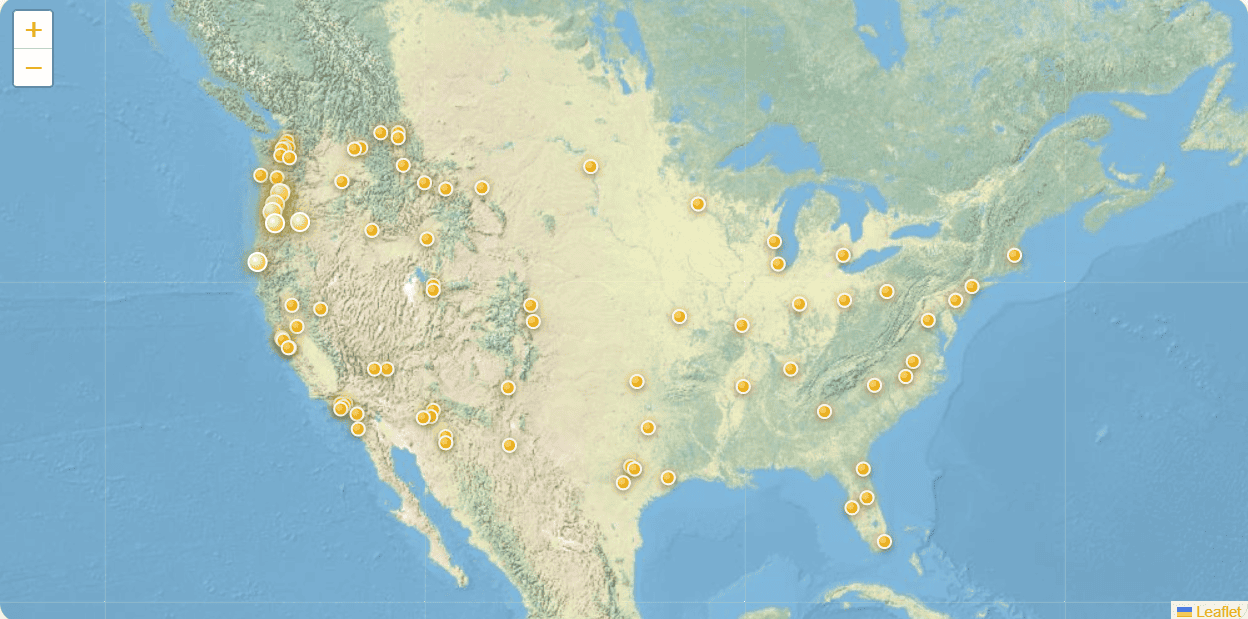
Where We’ve Moved Oregonians
Over 500 interstate moves completed
From next door to across the country — Cal’s has you covered.
Frequently Asked Questions
What’s the difference between moving insurance and valuation coverage?
Valuation coverage is a contractual liability cap built into your moving contract — not actual insurance. Real moving insurance is sold separately by licensed insurers and pays out under policy terms. Most movers offer valuation, not insurance, even when their staff use the words interchangeably.
How much does Full Value Protection cost?
Typically 1–3% of declared shipment value on top of the moving fee. For a $40,000 declared household, FVP costs $400–$1,200 depending on deductible level. Lower deductibles (or zero deductible) cost more. Call (503) 746-7319 for a quote with FVP options shown side by side.
Can I just rely on my homeowners insurance?
Almost always no. Most homeowners and renters policies exclude items in transit during a move. Some policies offer in-transit endorsements at modest cost — ask your agent specifically about “goods in transit” coverage during a move.
What happens if my shipment is delayed past the delivery window?
Federal regulations require carriers to provide a written delivery window. If they miss it without a documented reason (weather, road closure, carrier-side delay), you may be entitled to compensation for hotel and meal expenses during the delay. Document the delay and request the compensation in writing within the claim window.
Is FVP worth it for a 1-bedroom move under 1,000 miles?
Depends on your declared value. Under $5,000 of total value, the math is borderline — FVP costs $50–$150 to potentially save you a few hundred. Over $10,000 of declared value, FVP almost always pays for itself in expected damage rates. Request a quote for actual numbers on your specific move.
Ready to Get a Quote With Real Coverage Numbers?
Cal’s Moving & Storage shows released value vs. Full Value Protection pricing on every binding interstate quote. We’ll walk you through your declared value, deductible options, and any high-value item declarations — before you sign anything. No upselling, no fine print.
Call us at (503) 746-7319 for Portland Metro or (541) 250-6324 for Salem, Corvallis, and Eugene, email info@calsmovinghelp.com, or request your free quote online.
Quick Quote
Related Moving Resources
More guides for planning a safe long-distance move:
- How to Choose a Long Distance Mover: 2026 Scam-Avoidance Guide
- Long Distance Moving Cost from Oregon: 2026 Pricing Guide
- DIY vs Professional Long-Distance Movers: 2026 Cost Comparison
- Long Distance Movers in Oregon — service overview and interstate licensing.
- Moving to Washington from Oregon
- Moving to Idaho from Oregon
- Moving to Texas from Oregon
- Moving to Arizona from Oregon