 Corvallis/Salem/Eugene: (541) 250-6324
 info@calsmovinghelp.com


Texas to Oregon is a true cross-country relocation — 2,000+ miles, 5–10 days in transit, and a complete environmental and lifestyle reset. Most TX→OR movers are heading to Portland metro for the climate, walkability, and a different cultural pace; others are landing in Bend for the outdoor recreation or in Eugene and the Willamette Valley for the smaller-city feel.
Cal’s Moving & Storage handles TX→OR moves regularly — from Austin tech professionals to Houston families to Dallas retirees. This guide covers actual 2026 costs, realistic timelines, the tax shift that catches high earners off guard, and what to expect once you arrive.
Talk to a Pro!
Prefer to talk? Call (503) 746-7319 — we answer live during business hours.
★ 4.9 Google Rating · 2,300+ Reviews · BBB Accredited · USDOT Licensed · IOMI® Certified
Quick Facts: Moving from Texas to Oregon
- Average distance: Dallas → Portland is ~2,000 miles; Houston → Portland is ~2,500 miles
- Typical move time: 5–10 business days door-to-door
- Cost range: $5,500–$18,000 for a 2–3 bedroom home
- Tax shift: Texas has no state income tax; Oregon’s top bracket is 9.9%
- Hot Oregon destinations for Texans: Portland metro, Bend, Eugene
Why Texans Move to Oregon
The motivations cluster around climate, lifestyle, and cultural fit. Texas summers run 4–5 months of 95°F-plus weather with significant humidity in the eastern half of the state; Oregon summers are dry, mild, and rarely break 90°F for more than a few days. Many TX→OR movers cite this as the deciding factor.
Lifestyle changes drive the rest. Portland and Bend are walkable, bikeable, and transit-accessible in ways that Dallas and Houston are not. Outdoor recreation — mountains, coast, forests, rivers — sits within a 2-hour drive of nearly every Oregon city. And cultural fit matters: Oregon metros lean meaningfully more progressive than most of Texas, which appeals to some movers and is a hard pass for others.
How Much Does It Cost to Move from Texas to Oregon?
Long-haul interstate moves are priced by shipment weight, mileage, and selected services. Typical 2026 ranges with a fully licensed binding-estimate carrier and a dedicated truck:
| Home size | Dallas → Portland (~2,000 mi) | Houston → Portland (~2,500 mi) |
|---|---|---|
| Studio / 1 BR | $3,500–$6,500 | $4,000–$7,500 |
| 2 bedroom | $5,500–$9,500 | $6,500–$11,000 |
| 3 bedroom | $8,000–$14,000 | $9,500–$16,000 |
| 4+ bedroom | $12,000–$22,000 | $14,000–$25,000 |
Shared-load (consolidated) moves typically run 20–30% less, but with longer and less predictable delivery windows. For a deeper breakdown of how interstate pricing actually works, see our Long Distance Moving Cost guide.
How Long the Move Takes
Texas-to-Oregon moves are 5–10 business days, with the route and shipment size driving the variance:
- Dallas / Fort Worth → Portland or Salem: 5–7 business days with a dedicated truck
- Austin / San Antonio → Portland: 6–8 business days
- Houston → Portland or Eugene: 7–10 business days (longest route)
- El Paso → Bend or Portland: 5–7 business days (closer than the central/east TX origins)
Shared-load moves add 3–7 business days to any of the above. Always confirm whether your quote includes a delivery window or a delivery date — long-haul interstate moves are nearly always windowed.
Pro Tip: Skip the Drive, Ship the Car
Driving from Texas to Oregon is 30–40 hours of road time across multiple days, with hotels, meals, fatigue, and pet logistics on top. Auto transport from the Texas metros to Portland typically runs $1,200–$1,800 per vehicle and arrives within a week. For most TX→OR movers with kids, pets, or two cars, shipping the vehicles and flying the family is cheaper and dramatically less stressful than driving.
The Texas-vs-Oregon Tax Shift
This is the financial change that most often catches Texas movers off guard, especially high earners:
- Texas: No state income tax, but state sales tax of 6.25% (often ~8.25% with local additions). Property taxes are notoriously high.
- Oregon: No sales tax at all, but graduated state income tax of 4.75–9.9%. Property taxes are moderate (constitutional caps).
For high earners, the move usually costs more in total tax (Oregon’s top bracket bites). For middle earners, the picture is roughly even. For retirees on Social Security and savings, Oregon often saves money. Property tax savings can be substantial — an Oregon home assessed at $500K typically pays half to two-thirds what an equivalent Texas home would.
Other practical adjustments: Oregon does not allow self-service gasoline in most counties (an attendant pumps your gas), the Portland metro requires emissions testing, and Oregon — unlike Texas — has formal building inspections and stricter contractor licensing.
Where Texans Settle in Oregon
Portland metro — By far the most common destination. Beaverton and Hillsboro for tech families (Intel, Nike), Lake Oswego for established professionals, NE/SE Portland for younger movers, and Tigard or Tualatin for value-conscious commuters. See our Portland movers page.
Bend — The lifestyle move. High desert climate (similar to West Texas, very different from the I-35 corridor), world-class outdoor recreation, growing remote-work scene. Pricier than it used to be.
Eugene — University of Oregon town with a strong arts and outdoor culture. Smaller, more affordable, and a different pace than Portland.
Salem & the Willamette Valley — State capital plus surrounding mid-valley towns (Albany, Corvallis). Lower cost than Portland or Bend, more housing inventory, and a slower pace. See our Salem movers page.
The Oregon Coast — Cannon Beach, Newport, Lincoln City, Astoria. Common retirement destination for Texans wanting maximum environmental contrast.
Climate & Lifestyle Differences
The climate change is dramatic. Texas runs hot and (in the east) humid for most of the year, with brief, cold winters. Western Oregon runs cool, gray, and wet from October through May, then dry, mild, and beautiful from June through September. Eastern Oregon (Bend) is high desert — sunny, dry, with real winters and real summers.
Lifestyle differences matter. Portland and Bend are walkable, bikeable, and transit-friendly. Most Oregon cities have meaningful downtown cores. Restaurant scenes lean toward farm-to-table, craft beverage, and Asian and Pacific Northwest cuisine. The food cart culture is famous. Outdoor access is constant — mountains, coast, forests, rivers all within a short drive.
One real adjustment: Oregon winters are gray. Multiple weeks of overcast skies are normal. Many transplants experience seasonal mood changes in the first winter. Vitamin D supplements and a SAD lamp are not exotic suggestions — they’re standard advice.
How to Choose an Interstate Mover for Your TX→OR Move
Long-haul interstate moves attract more bad actors than short-haul moves. Vet your mover carefully:
- Verify USDOT and MC numbers at the FMCSA Mover Search tool
- Insist on a binding estimate — Not non-binding. Binding means the price is locked.
- Require a virtual or in-home survey — Anyone quoting blind over a 5-minute call is setting up a hostage-load scam
- Ask whether they’re the carrier or a broker — Brokers sell your job to whoever bids lowest, with no accountability
- Check Oregon CCB licensing for any work performed at the destination
Cal’s Moving operates from Portland, Salem, Corvallis, and Eugene with full FMCSA interstate authority. We are the carrier — not a broker — on every long-haul move we book. For deeper guidance on vetting movers and avoiding scams, see How to Choose a Long Distance Mover.
Frequently Asked Questions
How much does it cost to move from Dallas to Portland?
For a 2–3 bedroom home, expect $5,500–$14,000 with a fully licensed interstate carrier and dedicated truck. Shared-load options run 20–30% less but with longer delivery windows.
How long does it take to move from Texas to Oregon?
5–10 business days with a dedicated truck. Add 3–7 days for shared-load moves. Always confirm whether your quote is a delivery window or a delivery date.
Will I pay more in taxes by moving to Oregon?
For high earners, almost certainly — Oregon’s top income bracket is 9.9%. For middle earners, roughly even (Oregon’s no-sales-tax offsets income tax). For retirees, Oregon often saves money. Property taxes are typically much lower in Oregon.
Should I drive my car or ship it?
For most TX→OR movers with kids or pets, shipping is cheaper and dramatically less stressful than driving 30–40 hours. Auto transport runs $1,200–$1,800 per vehicle.
How far in advance should I book?
For May–September peak season, 8–12 weeks ahead. Off-season (October–April), 4–6 weeks is typically enough. Long-haul routes book up faster than short-haul.
What about my Texas vehicle registration?
Re-register in Oregon within 30 days of establishing residency. Costs are generally lower than Texas. Inspections are required only in the Portland metro and Medford areas (emissions only).
Will my A/C unit work in Oregon?
Most Oregon homes don’t have central air. Window units handle the few weeks of summer heat for most areas. If you’re settling in the eastern Oregon high desert, central air is more common but still not standard.
Are there items I can’t bring across state lines?
Standard interstate restrictions apply: no flammable liquids, no propane tanks, no perishables. Live plants are restricted by USDA rules. Your mover will provide a non-allowable items list.
Ready to Move from Texas to Oregon?
Cal’s Moving & Storage is an Oregon-owned, family-run interstate carrier with offices in Portland, Salem, Corvallis, and Eugene. We’ve helped Texas families settle into every corner of Oregon — from Austin remote workers landing in Bend to Houston retirees buying coastal cottages.
Call us at (503) 746-7319 for Portland Metro or (541) 250-6324 for Salem, Corvallis, and Eugene. Or request your free TX→OR estimate using the form below.
Quick Quote
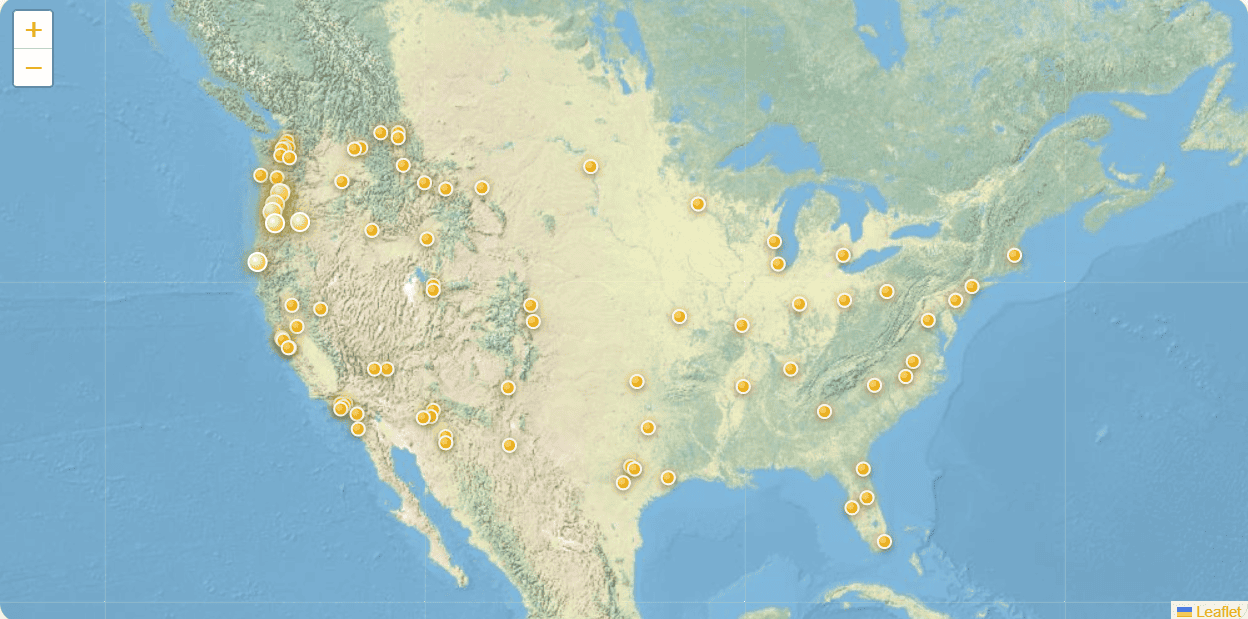
Where We’ve Moved Oregonians
Over 500 interstate moves completed
From next door to across the country — Cal’s has you covered.
Trusted, Licensed, and Loved by Oregonians
★ 4.9 GoogleBBB Accredited A+USDOT LicensedIOMI® CertifiedOregon CCB2,300+ Reviews
Services We Offer
Local Moving
Hourly, in-state moves done by Oregonians who know the territory.
Long-Distance Moving
Fully licensed interstate carrier with binding estimates and dedicated trucks.
Commercial Moving
IOMI®-certified office, lab, and facility moves with minimal downtime.
Storage
Climate-controlled warehouse storage including storage-in-transit on long moves.